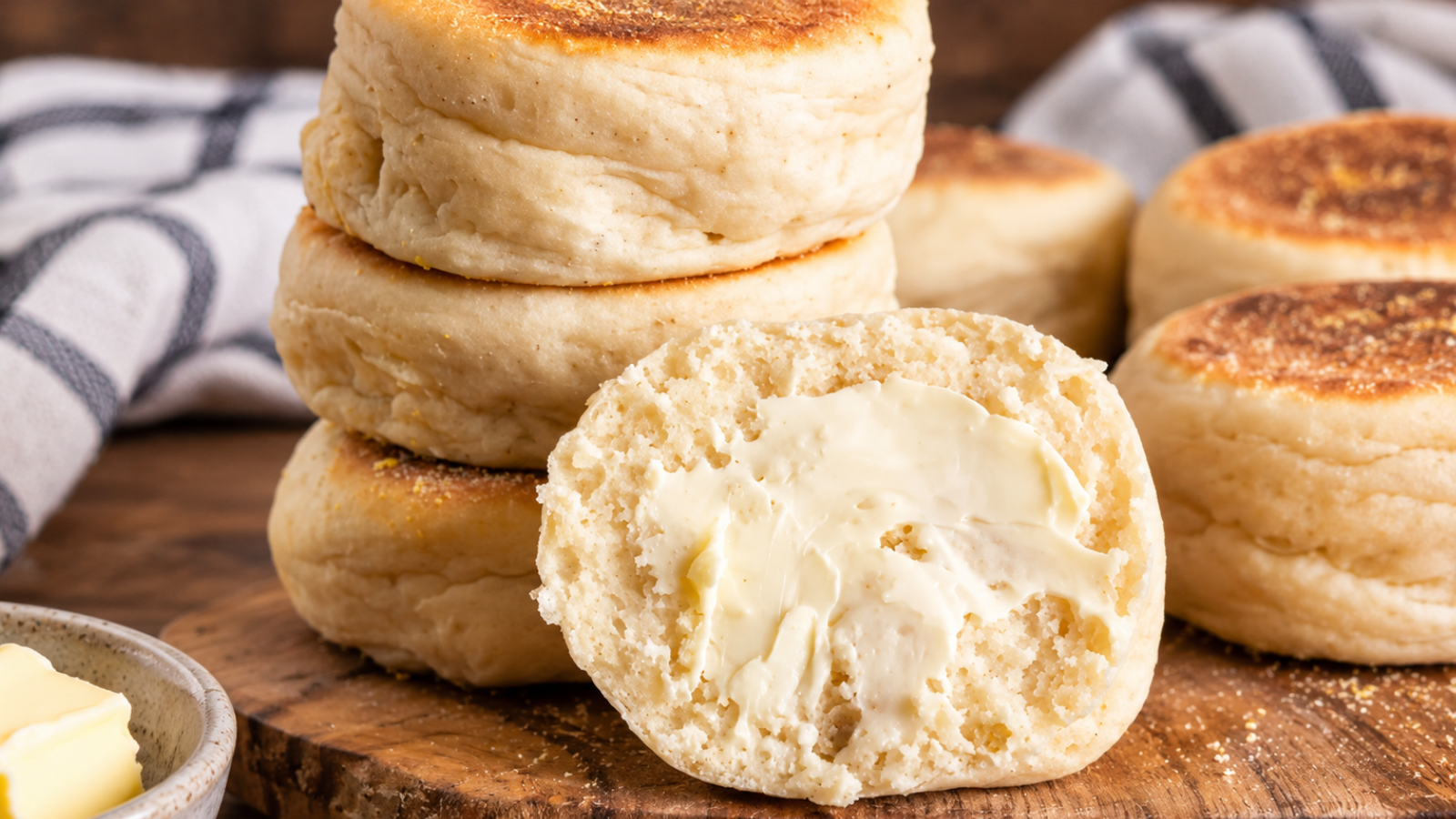
These homemade English muffins have golden, cornmeal-dusted crusts and soft, craggy centers that turn crisp when fork-split and toasted. Their sturdy but tender texture makes them especially good for Eggs Benedict, where they need to hold a poached egg and hollandaise without becoming soggy or falling apart.
The same-day yeast dough is shaped by hand and cooked slowly on a griddle or skillet, with no rings, starter, or overnight rise required. Once cooled, split the muffins with a fork to expose the nooks and crannies, then toast them just before serving.
What the Muffin Does in Eggs Benedict
The muffin is the foundation of the dish. It has to stay intact under a poached egg and sauce while still cutting easily with a fork. Splitting it with a fork leaves jagged, uneven surfaces that catch yolk and hollandaise, and toasting turns those surfaces crisp.
Slicing with a knife flattens the air pockets and leaves a smooth cut. That is why the recipe asks you to cool the muffins, fork-split them, and toast the halves right before serving.
The Ingredients That Shape the Texture
This dough uses few ingredients, so each one has a job. Weighing the flour is the most reliable way to keep the dough soft; the gram amounts in the recipe card are the reference.
- Bread flour adds chew and enough structure to carry the toppings. All-purpose flour also works and gives a slightly softer bite.
- Whole milk adds flavor and a tender crumb, and the small amount of sugar feeds the yeast and helps the crust turn golden.
- Instant yeast is mixed into the warm milk first, so you can see it foam before committing the flour. Active dry yeast works in the same amount.
- Fine cornmeal keeps the muffins from sticking and gives the crust its crunch. Fine semolina can replace it.
Shape the Dough by Weight, Not With a Cutter
Divide the risen dough into eight equal pieces, about 80 grams each, and pat each one into a 3-inch disc. This skips the rolling pin and the cutter, so there is no scrap dough to re-roll, and the gentle handling protects the air bubbles that become the nooks and crannies.
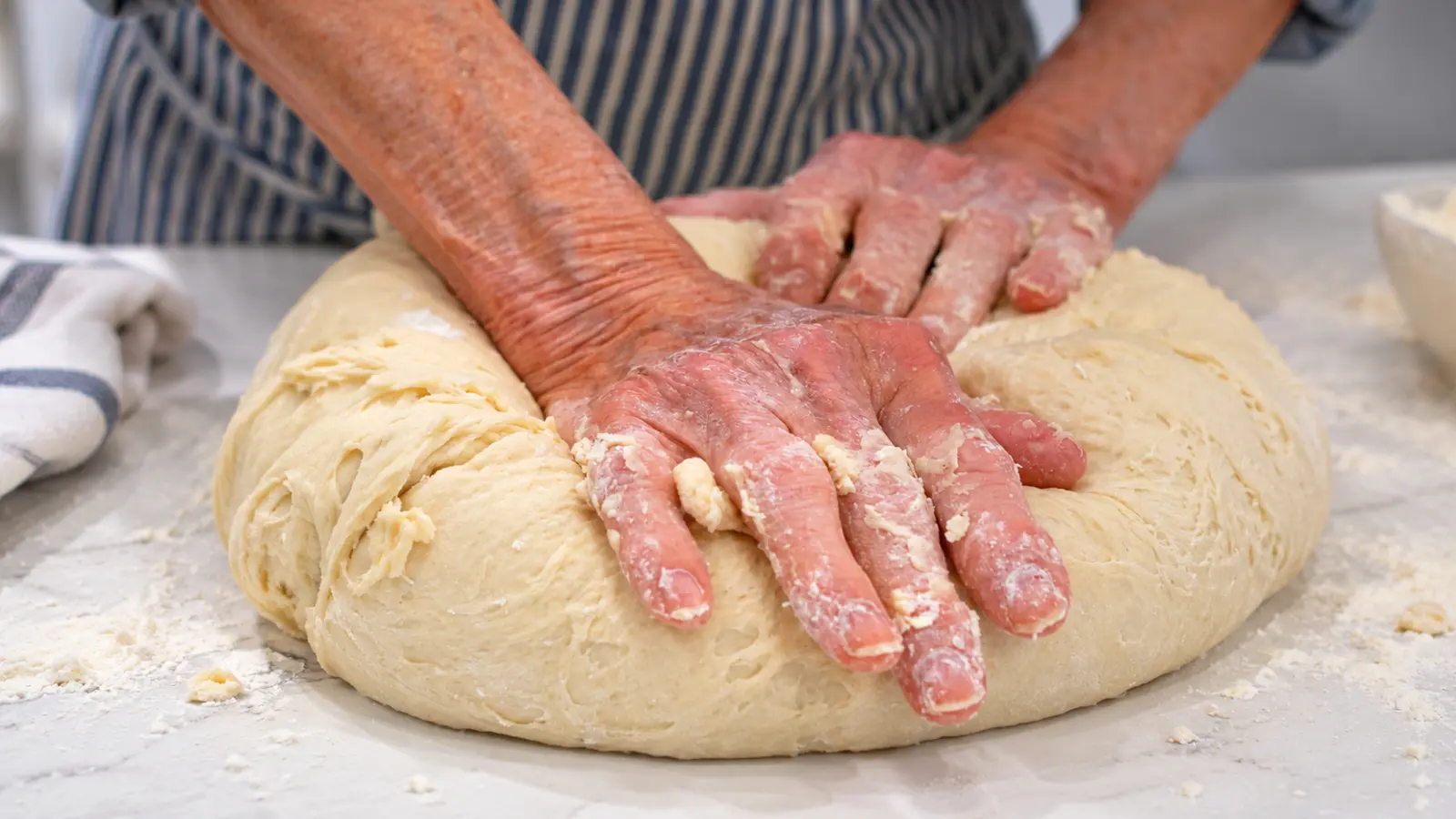
Keep the dough soft. It should feel slightly tacky after kneading, and extra flour or long kneading gives a denser muffin with fewer pockets. Coat both sides of each disc in cornmeal and let the muffins rise until puffy. Lift them with a wide spatula and avoid squeezing, because a deflated muffin cooks up flatter.
Cook Low and Slow, Then Check the Center
Cook the muffins over medium-low heat for about 7 minutes per side, then check the center with an instant-read thermometer. It should read about 200°F. A hot pan browns the crust before the middle is cooked, so lower the heat if the cornmeal darkens quickly.
The sides stay pale; they should feel set, not wet. If the outsides are golden but the center is not done, finish the muffins on a sheet pan in a 350°F oven for about 10 minutes, until there is no sign of wet dough inside. Between batches, scrape the loose cornmeal out of the pan so it does not scorch onto the next muffins.
Homemade English Muffins for Eggs Benedict
Soft, homemade English muffins cooked gently on a griddle, with golden cornmeal crusts and craggy, fork-split centers that toast beautifully under poached eggs and hollandaise sauce
Stored in this browser. Check off items as you shop.
Ingredient quantities change with servings. Metric amounts appear when an equivalent is available. Cooking times, temperatures and method steps do not scale automatically.
Ingredients
Measurement help for this recipe
Metric equivalents use the values entered for this recipe or GUSTANA conversion data when available. Ingredients without an equivalent remain in their original units.
| 1 cup whole milk | 240 mL |
| 1 tablespoon granulated sugar | 12 g |
| 1 1/2 teaspoons instant yeast | 5 g |
| 3 cups bread flour | 360 g |
| 1 1/4 teaspoons table salt or fine sea salt | 7 g |
| 2 tablespoons unsalted butter | 28 g |
| 2 tablespoons bread flour, for dusting | 15 g |
| 1/4 cup fine yellow cornmeal | 35 g |
| 2 teaspoons neutral oil | 10 35 |
Instructions
- Warm the milk to 105 to 110°F. In a large bowl, stir together the warm milk, sugar, and yeast. Let stand for about 5 minutes, then continue with the recipe. Instant yeast does not need to foam noticeably before use.
If nothing bubbles after 10 minutes, the yeast may be old or the milk too hot or too cool. Start over with fresh milk and yeast.
- Add the bread flour, salt, and melted butter. Stir until a shaggy dough forms, then knead on a lightly floured surface for about 5 minutes, or with a dough hook on medium-low speed for about 4 minutes, until smooth and soft but still slightly tacky.
Dust with flour only when the dough sticks to your hands, a tablespoon at a time. Too much flour makes denser muffins with fewer nooks.

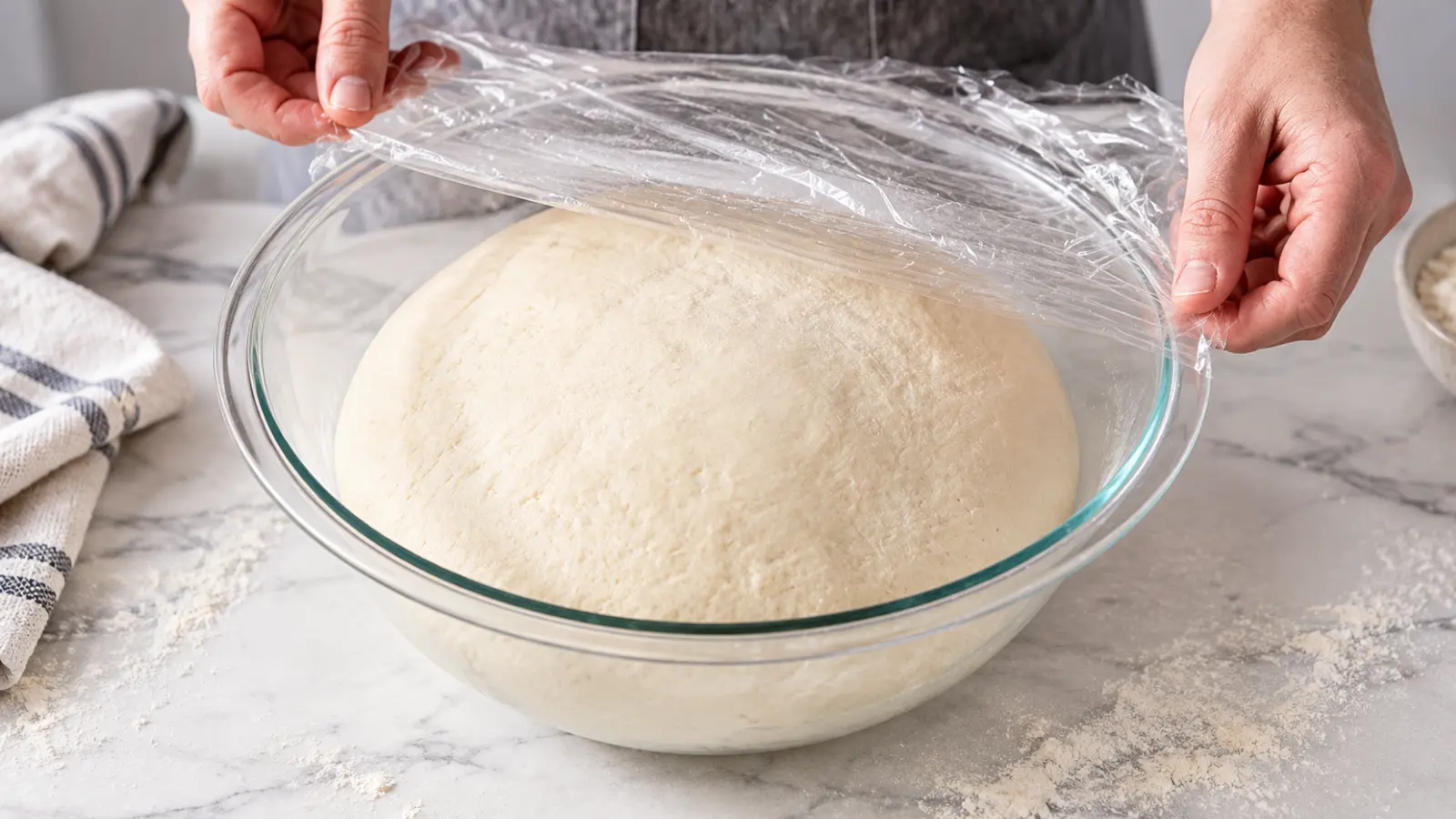
- Shape the dough into a ball and place it in a large bowl greased with 1 teaspoon of the oil, turning it once to coat. Cover and let rise in a warm spot until doubled in size, about 1 hour.
Go by volume rather than the clock; a cool kitchen can take longer.
- Sprinkle about half of the cornmeal over a large sheet pan. Turn the risen dough onto a lightly floured surface and press it gently into a rough rectangle. Divide it into 8 equal pieces, about 80 g (2 3/4 oz) each if you weigh them.
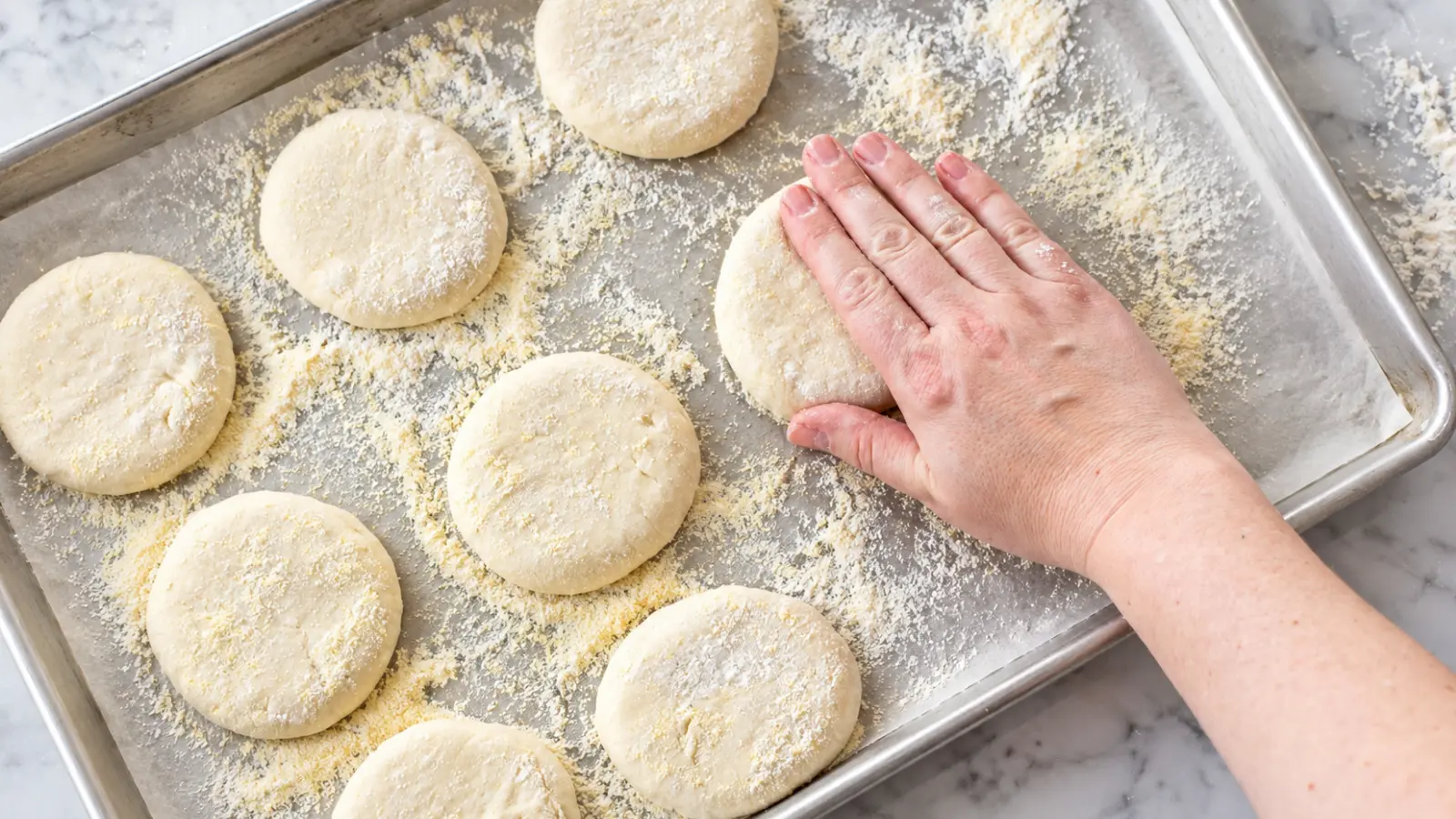
- Shape each piece into a smooth ball, then press it into a disc about 3 inches wide and 3/4 inch thick. Set the discs on the cornmeal, turn each one to coat both sides, and space them about 1 inch apart. Sprinkle the tops with the remaining cornmeal.
Press gently with your palm. A rolling pin pushes out the air that becomes the nooks and crannies.
- Cover the discs loosely with a clean towel and let them rise until puffy and noticeably taller, 35 to 45 minutes.
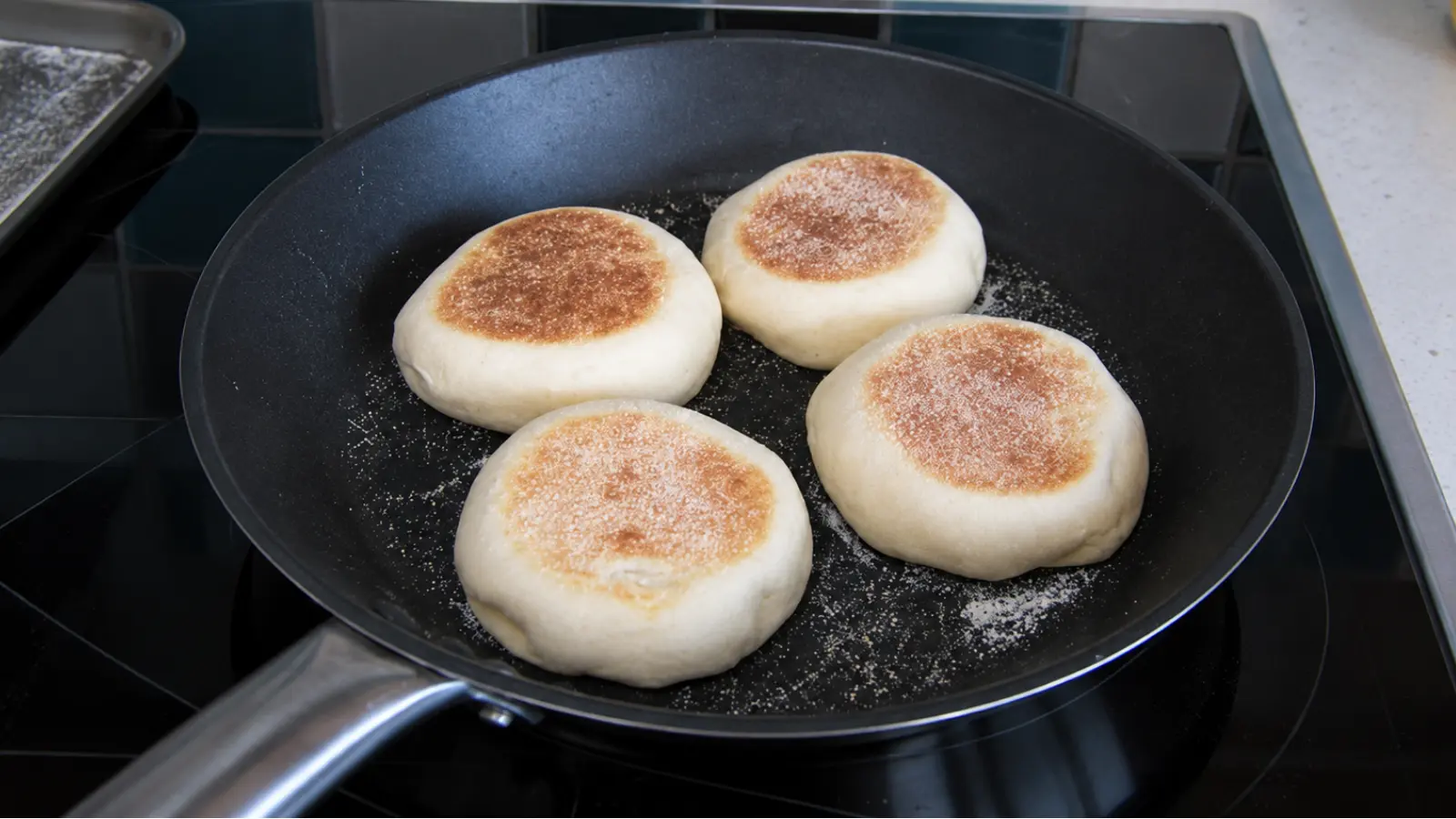
- Heat a 12-inch skillet or griddle over medium-low heat and brush it with about 1/2 teaspoon of the oil. Using a wide spatula, slide 4 muffins into the pan with the cornmeal that clings to them, leaving space between each one. Cook, uncovered, until the underside is deep golden brown, about 7 minutes.
If the cornmeal darkens in the first few minutes, lower the heat. A pan that is too hot browns the crust before the center cooks.
- Turn the muffins carefully and cook the second side until golden, about 7 minutes. Insert an instant-read thermometer through the side into the center of one muffin; it should read about 200°F. Transfer the muffins to a wire rack.
If the outsides are golden but the center is under 200°F or looks wet, bake the muffins on a sheet pan at 350°F for about 10 minutes.
- Scrape the loose, scorched cornmeal out of the pan and wipe it if needed. Brush with the remaining 1/2 teaspoon oil and cook the remaining 4 muffins the same way.
- Let the muffins cool on the rack for at least 30 minutes, until barely warm.
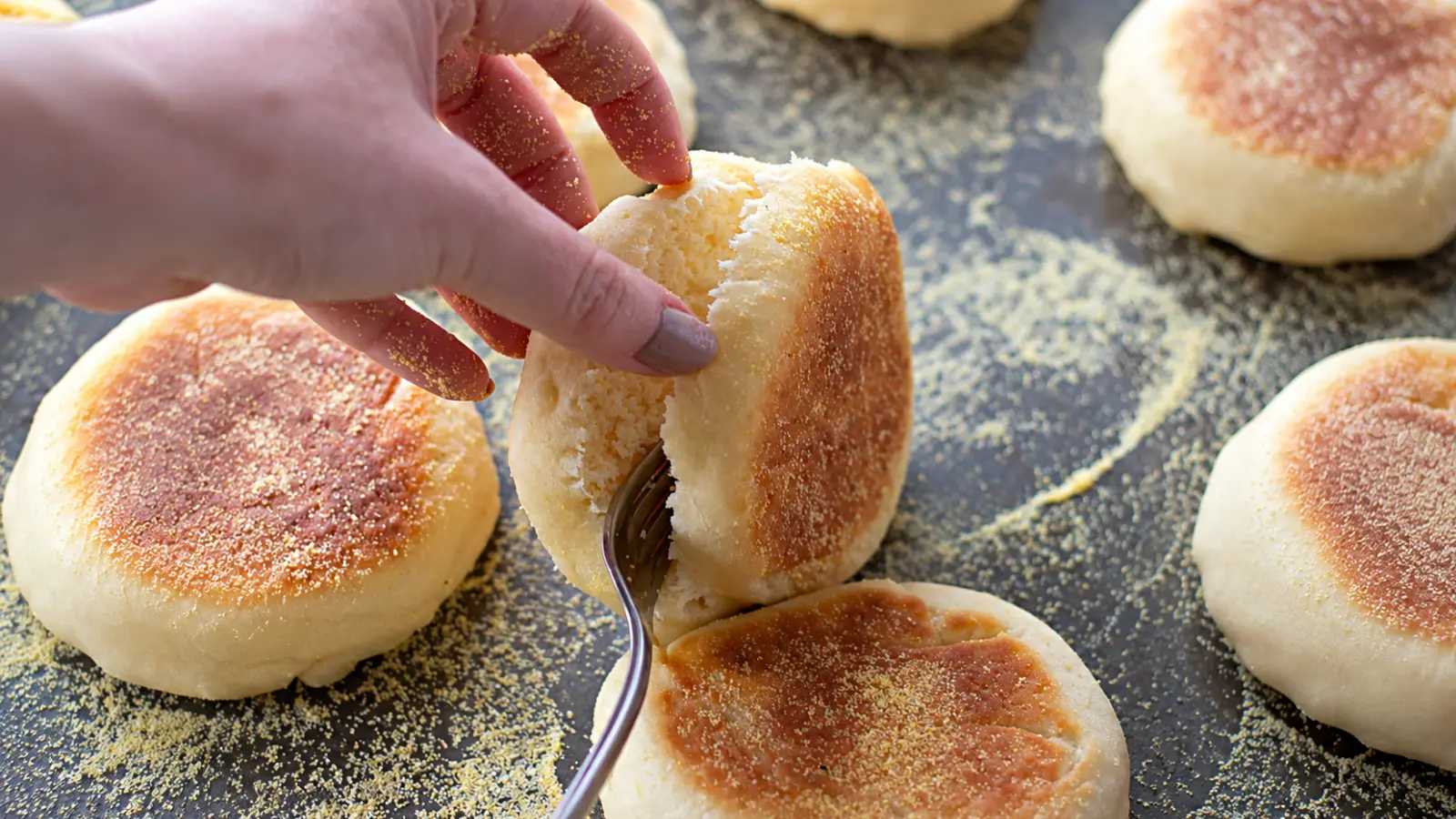
- To serve, push the tines of a fork into the edge of a muffin at its midpoint and work all the way around, then pull the halves apart. Toast the halves cut-side up until golden and crisp, just before assembling your Eggs Benedict.
Do not slice with a knife; it flattens the pockets the fork leaves open.
Recipe Notes
- Weigh the flour if you can. Three cups of bread flour, spooned and leveled, is about 360 g.
- Keep the dough soft and slightly tacky. Extra flour and long kneading make a denser muffin with fewer nooks.
- Cook over medium-low heat. If the cornmeal darkens quickly, lower the heat instead of shortening the time.
- The center should read about 200°F on an instant-read thermometer. If the outsides are golden first, finish the muffins on a sheet pan at 350°F for about 10 minutes.
- Scrape loose, scorched cornmeal from the pan between batches. An electric griddle or two skillets can cook all 8 muffins at once.
- Cool for at least 30 minutes before splitting, and split with a fork, not a knife. Total time ends when the muffins are ready to split; toasting adds a few minutes.
- Store cooled muffins airtight at room temperature for up to 3 days, or freeze fork-split muffins for up to 2 months and toast them from frozen.
Nutrition (per serving, estimated)
- Serving Size: 1 English muffin (1 of 8)
- Calories: 250 kcal
- Total Fat: 6 g
- Saturated Fat: 3 g
- Trans Fat: 0 g
- Cholesterol: 11 mg
- Sodium: 355 mg
- Total Carbohydrates: 41 g
- Dietary Fiber: 2 g
- Total Sugars: 3 g
- Protein: 7 g
My Recipe Notes Private notes for next time
These notes are stored only in this browser.
Split and Toast the Muffins Before Serving
Let the muffins cool for at least 30 minutes so the crumb sets. Push the tines of a fork into the edge at the midpoint, work all the way around, and pull the halves apart. Fork-split muffins have the craggy surface that catches sauce; knife-cut ones do not.
Toast the halves cut-side up until golden and crisp, and do it last, so they are hot when the eggs and hollandaise are ready. For a crowd, toast the halves on a sheet pan in a 375°F oven for about 10 minutes.
Make-Ahead, Storage, and Freezing
Cool the muffins completely, then store them whole in an airtight container at room temperature for up to 3 days. Split and toast only what you plan to serve.
For longer storage, fork-split the cooled muffins, freeze them in a well-sealed freezer bag for up to 2 months, and toast them straight from the freezer. That makes them a convenient brunch base: only the eggs and hollandaise need to be made fresh.
Helpful Tools for This Recipe
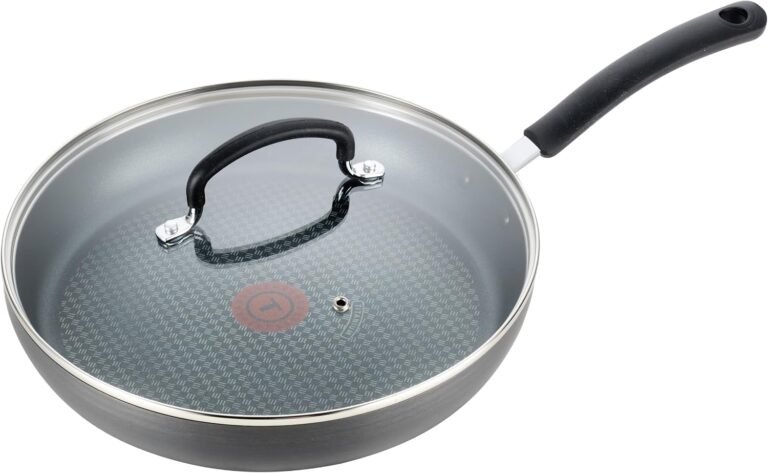
22-Inch Electric Ceramic Nonstick Cooking Griddle
Cooks several English muffins at steady medium-low heat, helping both sides brown gently without rushing the center
View on Amazon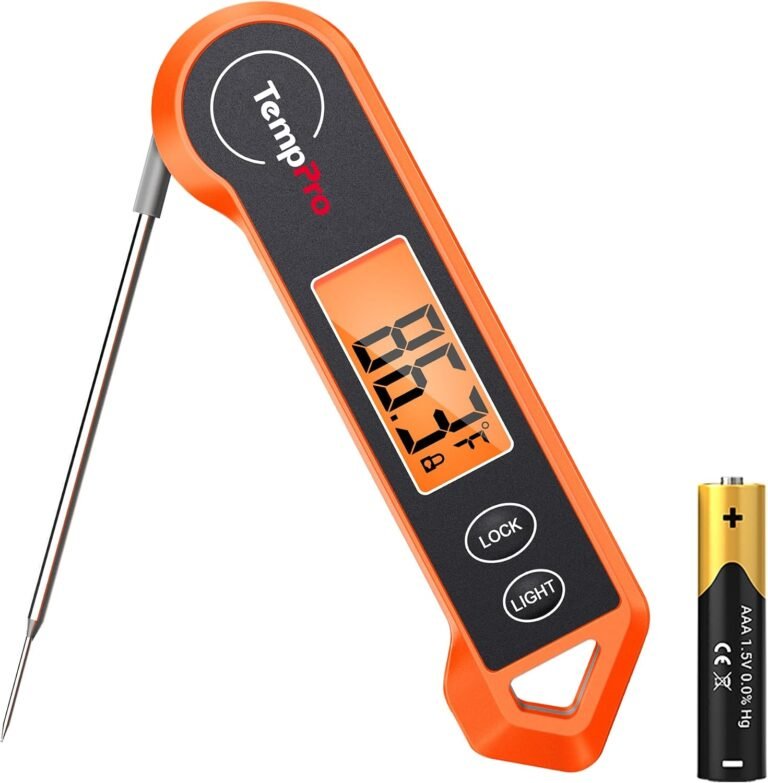
Digital Instant-Read Kitchen Food Thermometer
Checks the center of each English muffin for about 200°F, so you can confirm the dough has cooked through
View on Amazon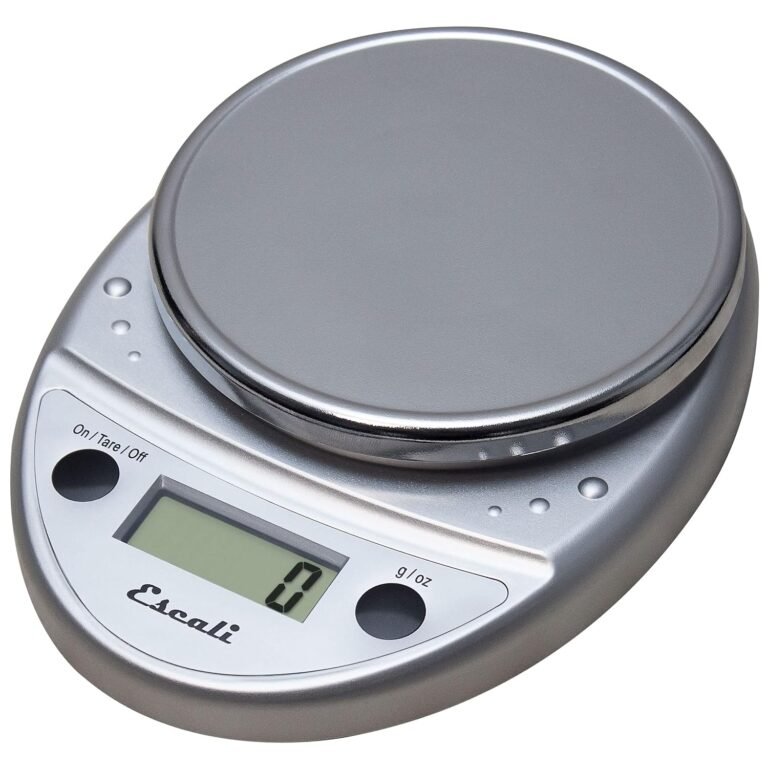
Digital Kitchen Scale with Gram and Ounce Readout
Weighs flour for a soft dough and divides it into eight even portions, helping every English muffin cook uniformly
View on Amazon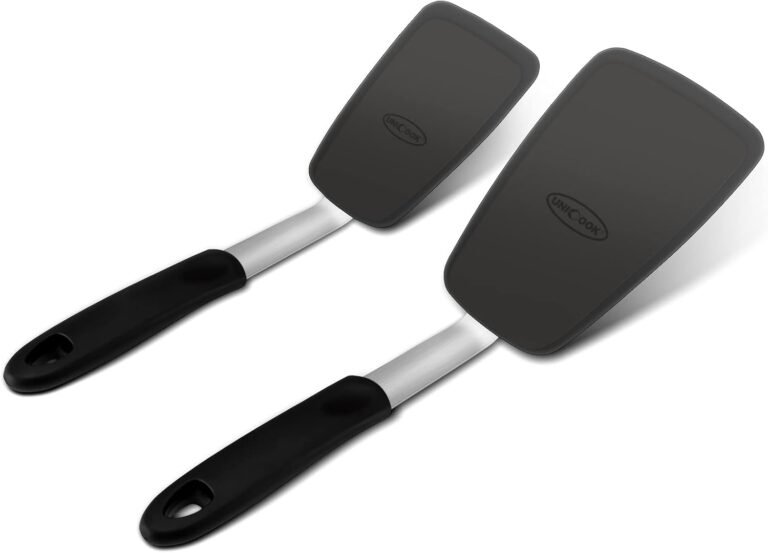
Large Flexible Silicone Turner with Soft Grip
Slides under the risen English muffins to lift and turn them gently without flattening the dough during cooking
View on AmazonSome links may be affiliate links. If you purchase through them, GUSTANA may earn a commission at no extra cost to you.
Frequently Asked Questions
Do I need English muffin rings to make homemade English muffins?
No. This dough is firm enough to divide and shape by hand into 3-inch rounds, so rings are not necessary. English muffin rings are more useful for very soft or batter-like doughs and can create taller, more uniform sides, but this recipe is designed to hold its shape without them.
Should English muffins be toasted for Eggs Benedict?
Yes. Fork-split the cooled muffins and toast the cut sides until golden and crisp before assembling the Eggs Benedict. Toasting gives the muffin enough structure to hold the poached egg and hollandaise without becoming soggy too quickly, while still keeping the center tender.
Why don’t my English muffins have nooks and crannies?
The dough may have been too dry or handled too aggressively. Keep it soft and slightly tacky, add as little extra flour as possible, shape the rounds gently, and avoid pressing down on them after the second rise. Once cooled, split the muffins with a fork instead of slicing them with a knife to expose the irregular pockets inside.
Why are my English muffins browned outside but still doughy inside?
The skillet is probably too hot. English muffins are thick enough that they need relatively low heat so the center cooks before the crust becomes too dark. Cook them over medium-low heat and check for about 200°F in the center. If the outside is already golden, finish them in a 350°F oven for about 10 minutes.
Can I use all-purpose flour instead of bread flour?
Yes. Replace the bread flour with the same amount of all-purpose flour, but expect a slightly softer and less chewy muffin. Because different flours absorb liquid differently, keep the dough soft and add extra flour only a tablespoon at a time if it is too sticky to handle.
Can I make English muffins ahead for Eggs Benedict?
Yes. Cool the muffins completely and store them whole in an airtight container at room temperature for up to 3 days. For longer storage, fork-split them first and freeze them in a well-sealed bag for up to 2 months. Toast the frozen halves directly from the freezer when you are ready to assemble the Eggs Benedict.