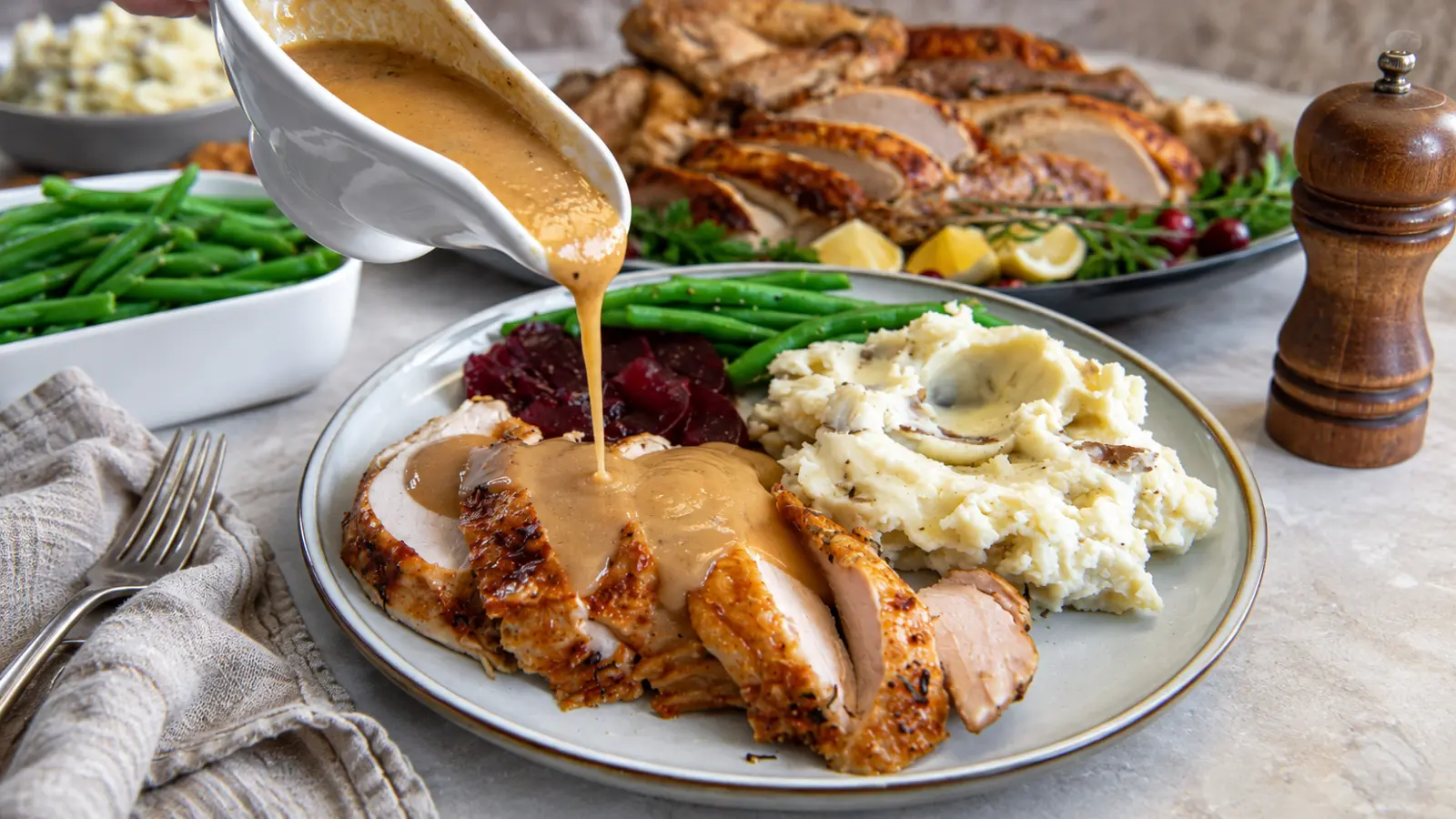
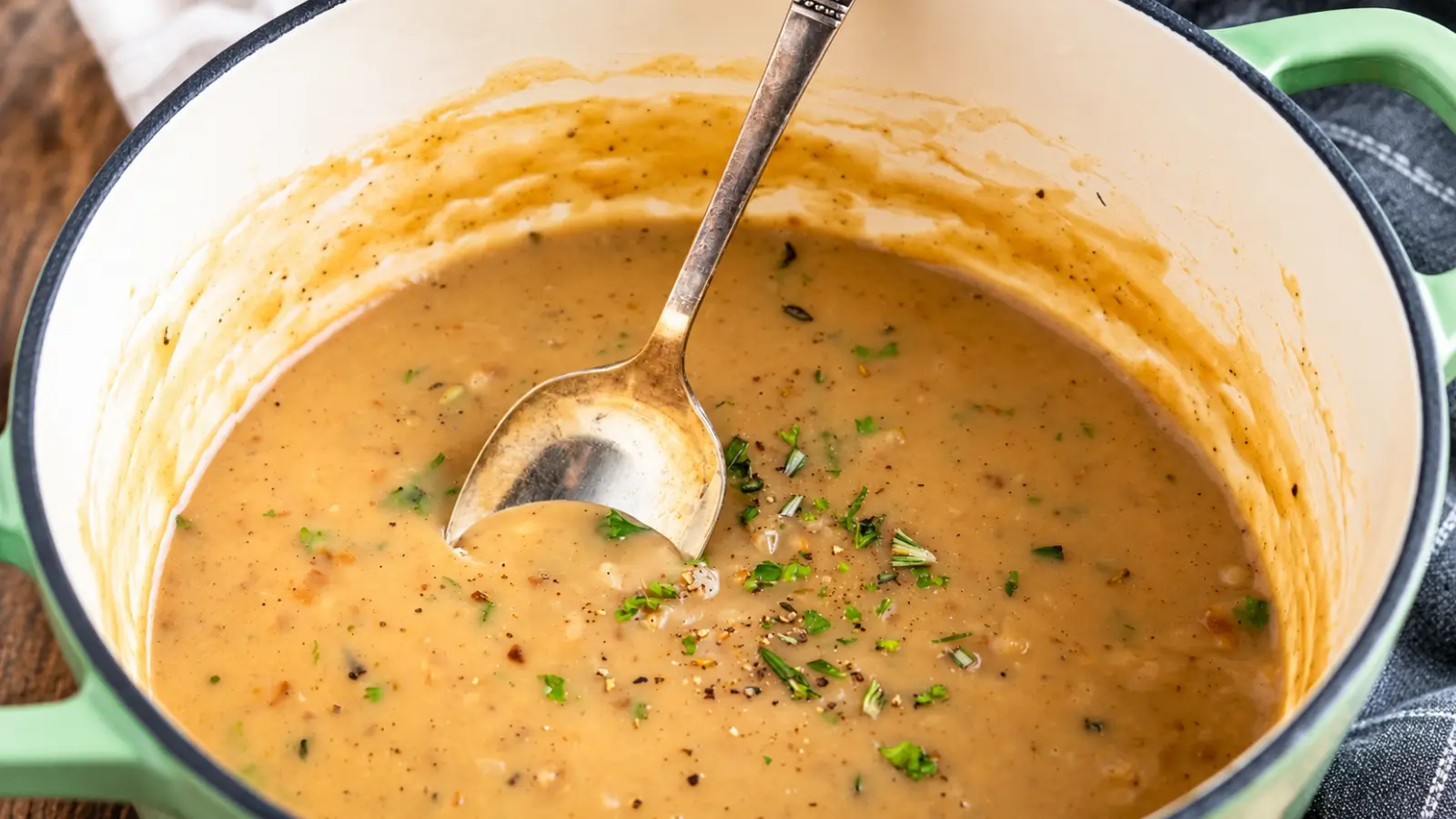
This turkey giblet gravy is rich, savory, and pourable, with deep turkey flavor from homemade giblet broth and pan drippings. It is made with the neck, heart, and gizzard from a whole turkey, then thickened with a simple roux for a classic Thanksgiving gravy that coats a spoon without becoming overly heavy.
Separating the turkey fat for the roux and adding the defatted pan juices to the broth builds flavor without making the gravy greasy. Finely chopped neck meat and giblets give it a traditional texture, while seasoning at the end helps control salt when the turkey has been brined.
In this guide, you’ll learn which turkey parts to use, how to make the giblet broth, separate and use the pan drippings, thicken the gravy smoothly, adjust the consistency, prepare part of the recipe ahead, and safely store and reheat leftovers.
What to Use From the Turkey
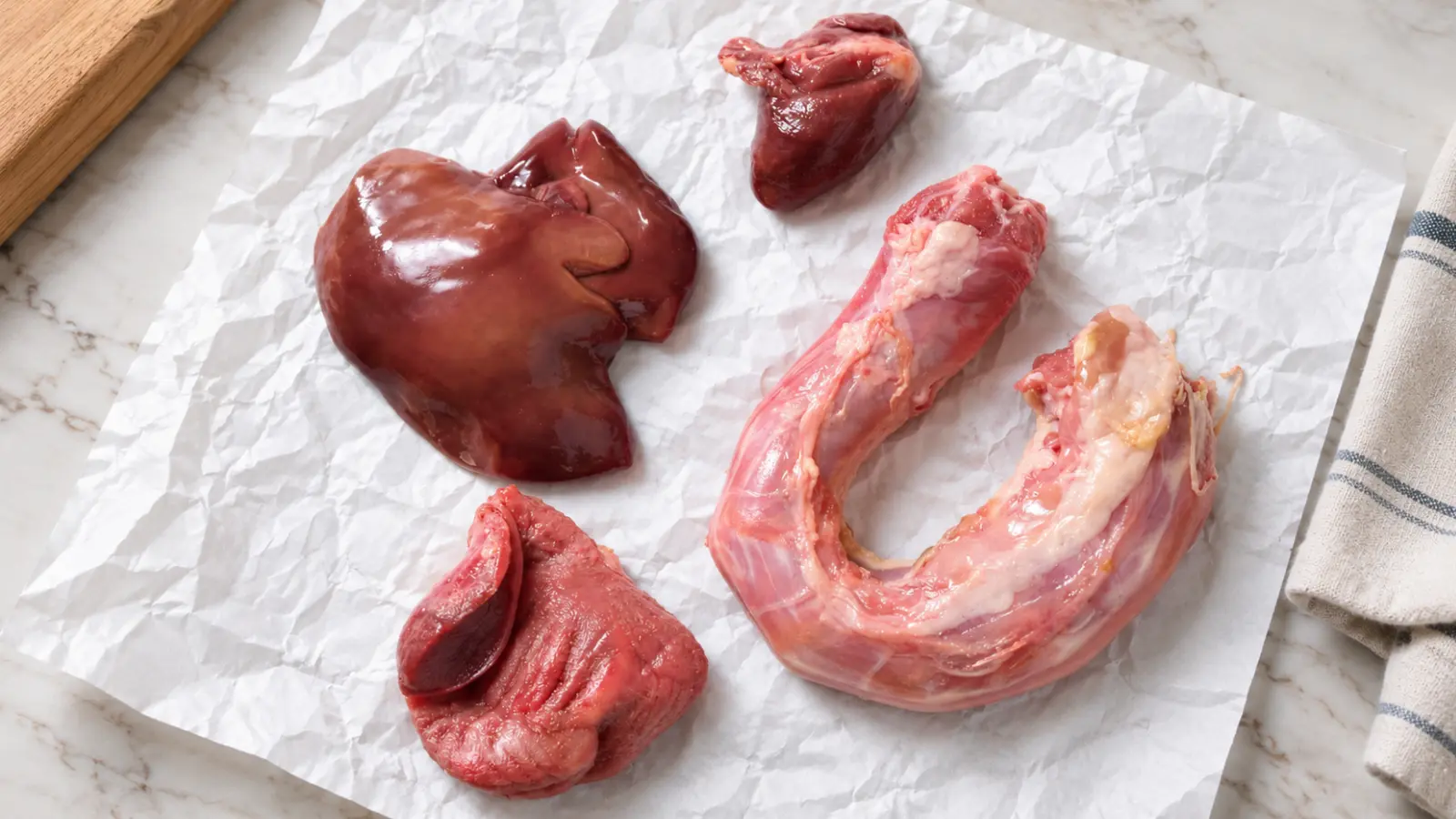
Use the neck, heart, and gizzard. After simmering, pull the meat from the neck and chop it finely with the heart and gizzard before stirring it into the finished gravy.
Set the liver aside. In a long simmer its flavor turns strong and metallic and can overpower the broth. If your packet has no heart or gizzard, make the broth with the neck alone; the gravy will still taste clearly of turkey.
You do not need to rinse the parts. USDA advises against washing raw poultry because the splashing spreads bacteria around the sink and counters, and the long simmer cooks the parts thoroughly. Wash your hands and clean every surface they touched with hot, soapy water instead.
How This Giblet Gravy Comes Together
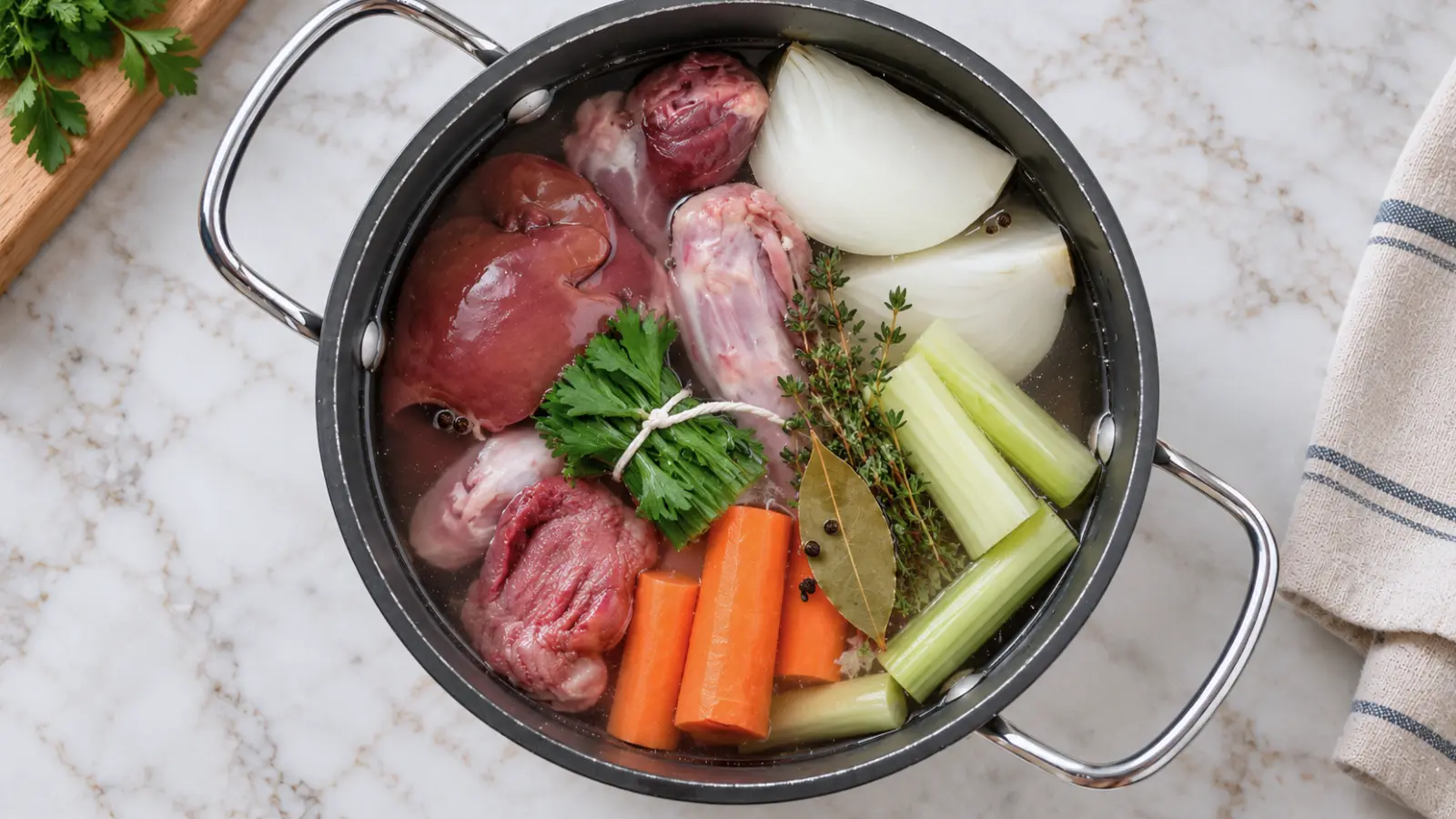
The broth comes first. The turkey parts simmer gently with the vegetables and herbs until the gizzard is tender and the parts reach 165°F (74°C), the safe temperature for poultry. A gentle simmer keeps the broth clear; a hard boil clouds it and reduces it too fast.
The roux comes from the roasting pan. Only the separated fat goes into the roux, in equal amounts by volume, so the gravy thickens smoothly. The juices under the fat go into the broth, along with the browned bits you loosen from the pan, so they flavor the gravy without making the roux greasy.
Season last. Pan juices from a brined or heavily salted turkey can be quite salty, so taste the gravy before adding any salt.
Giblet Gravy for Turkey
A classic turkey giblet gravy made with homemade neck, heart, and gizzard broth, turkey pan drippings, and a simple roux.
Stored in this browser. Check off items as you shop.
Ingredient quantities change with servings. Metric amounts appear when an equivalent is available. Cooking times, temperatures and method steps do not scale automatically.
Ingredients
Measurement help for this recipe
Metric equivalents use the values entered for this recipe or GUSTANA conversion data when available. Ingredients without an equivalent remain in their original units.
| 1 package turkey neck, heart, and gizzard | 1 package |
| 4 cups water | 960 mL |
| 1 medium yellow onion | 150 g |
| 1 stalk celery | 60 g |
| 1 medium carrot | 70 g |
| 4 sprigs fresh parsley | 6 g |
| 2 sprigs fresh thyme | 2 g |
| 1 bay leaf | 1 |
| 1/2 teaspoon black peppercorns | 1 g |
| 4 tablespoons fat from turkey pan drippings | 55 g |
| 1/4 cup all-purpose flour | 30 g |
| 3 cups strained giblet broth | 720 mL |
| 1/4 teaspoon kosher salt | 1.5 g |
| 1/4 teaspoon freshly ground black pepper | 0.5 g |
| 1 cup low-sodium turkey or chicken broth | 240 mL |
Instructions
- Remove the neck and giblet packet from the turkey. Set the liver aside for another use. Do not rinse the neck, heart, or gizzard. Wash your hands with soap and water, then clean and sanitize every surface the raw parts touched.
Check both the neck cavity and the body cavity; the neck is often outside the giblet packet, and some packets are wrapped in paper.

- Put the neck, heart, gizzard, water, onion, celery, carrot, parsley, thyme, bay leaf, and peppercorns in a 3- to 4-quart saucepan. Bring to a boil over high heat, then reduce to a gentle simmer and partially cover. Cook until the gizzard is tender and the parts reach 165°F (74°C), 60 to 75 minutes, skimming off any foam that rises.
Keep the heat at a gentle simmer; a hard boil clouds the broth and reduces it too quickly.
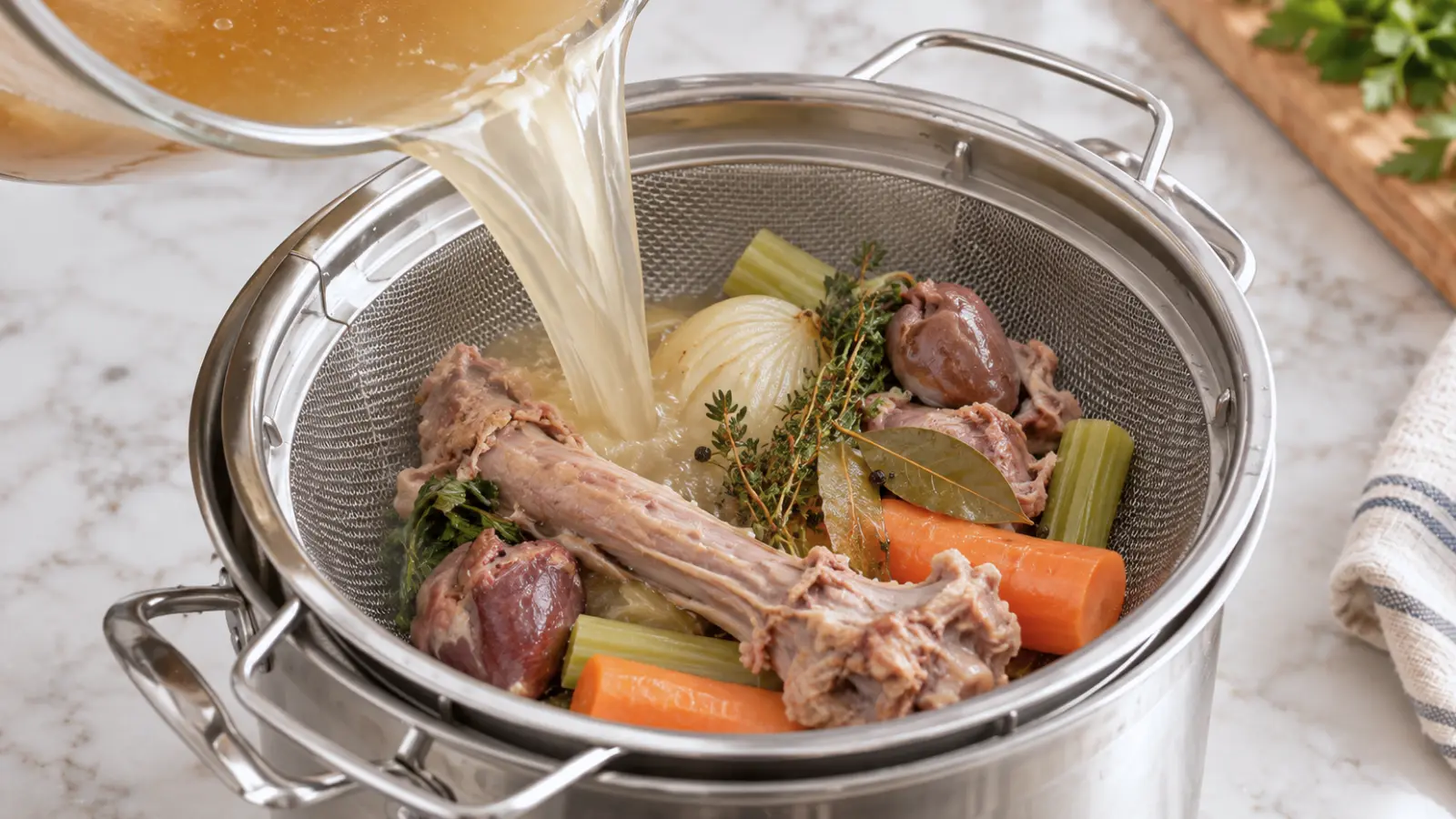
- Strain the broth into a heatproof measuring jug or bowl and keep it warm. Set the neck, heart, and gizzard aside until cool enough to handle, about 10 minutes. Pull the meat from the neck and chop it finely with the heart and gizzard.
Discard the cooked vegetables, herb stems, peppercorns, and neck bones after straining. If you are cooking ahead, refrigerate the broth and chopped meat separately.
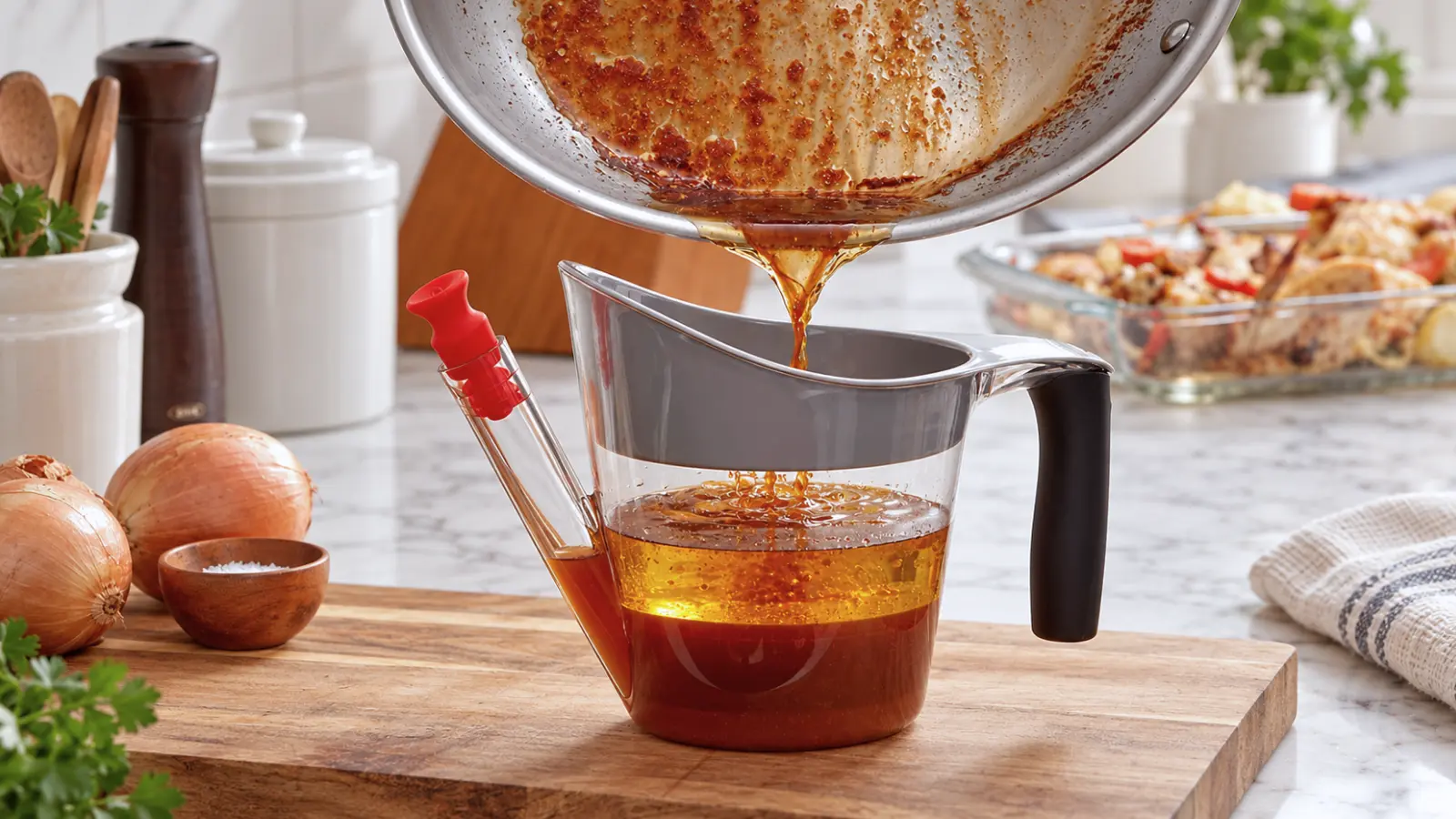
- When the turkey comes out of the oven, pour the pan drippings into a gravy separator or heatproof measuring cup and let the fat rise. Spoon 4 tablespoons of the fat into a medium saucepan, adding unsalted butter if you are short. Pour the juices from beneath the fat into the strained broth. Pour 1/2 cup (120 mL) of the warm broth into the roasting pan, scrape up the browned bits, and strain the liquid back into the rest of the broth.
If the turkey was brined, taste the pan juices first. If they are very salty, add only part of them and make up the difference with low-sodium broth.
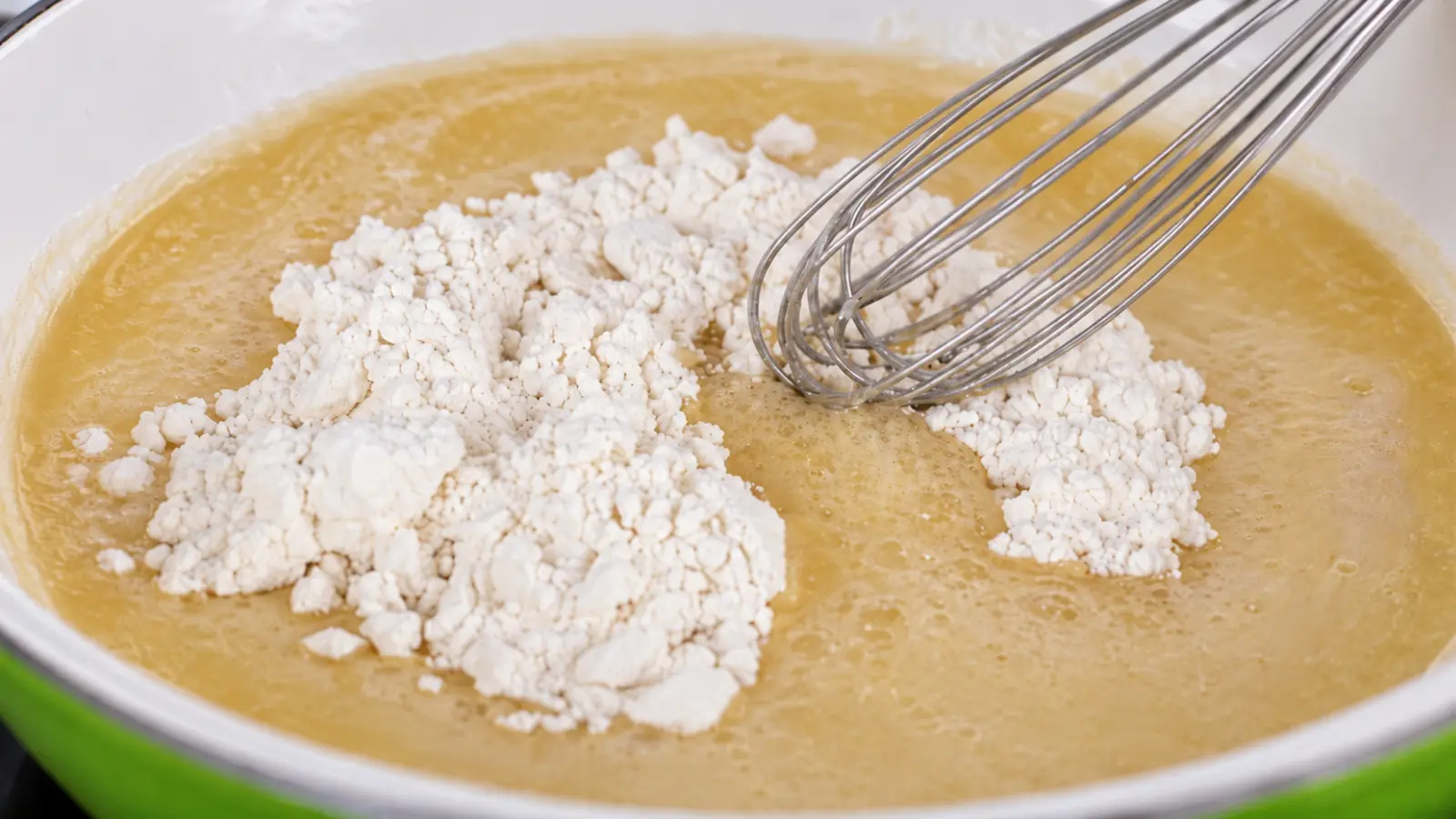
- Heat the fat in the saucepan over medium heat. Whisk in the flour and cook, whisking constantly, until smooth and lightly golden, about 2 minutes.
Do not let the roux darken deeply; a light roux keeps the gravy pale and lets the turkey flavor stand out.
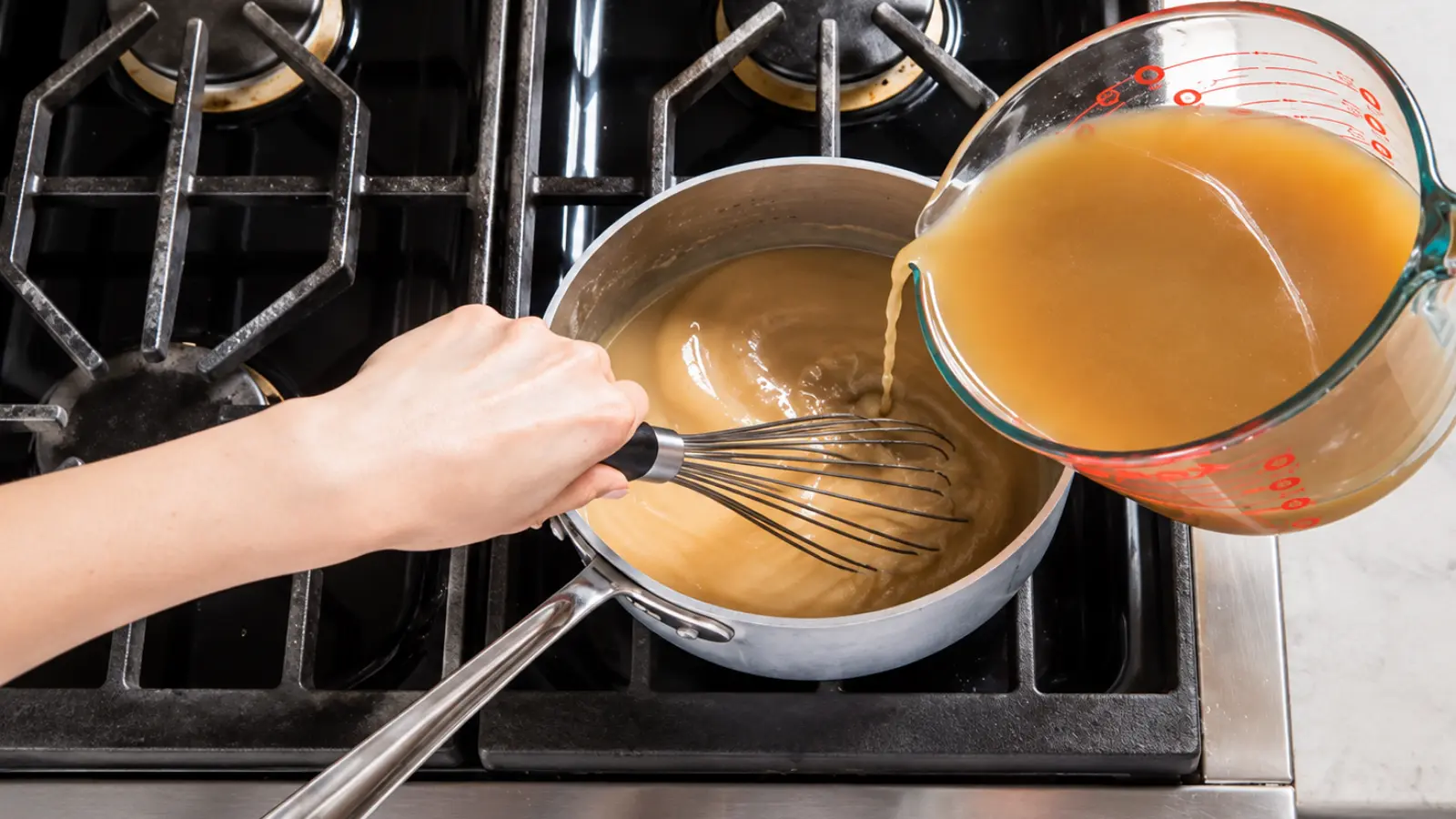
- Measure 3 cups (720 mL) of the warm combined broth, topping it up with warm low-sodium broth if it is short. Gradually whisk it into the roux, then bring to a gentle simmer. Cook, whisking often, until the gravy coats the back of a spoon, 8 to 10 minutes. Keep any leftover broth warm for thinning.
Add the first splash of broth slowly to keep the roux smooth, then pour in the rest in a steady stream.
- Stir in the chopped neck meat, heart, and gizzard and heat through. Season with the kosher salt and pepper, then taste and adjust. Serve hot, thinning with warm broth by the tablespoon if needed.
If the turkey was brined or the pan juices are salty, taste before adding any extra salt.
Recipe Notes
- The giblet packet varies by turkey. This recipe uses the neck, heart, and gizzard; leave out the liver for a cleaner, less metallic-tasting gravy.
- Total time counts the broth and the gravy, not the turkey's roasting time. The broth is meant to simmer while the turkey roasts.
- The gravy is medium-bodied and pourable. For a thicker gravy, simmer it a few minutes longer; for a thinner one, whisk in warm broth. A 1/4-cup portion is modest, so plan on fewer, more generous servings if your guests like plenty of gravy.
- You can cook and refrigerate the broth and chopped meat one day ahead. Finish the gravy with fresh pan drippings on serving day.
- Refrigerate leftovers within 2 hours for 3 to 4 days, or freeze in portions for up to 3 months for best quality. Reheat to a rolling boil (at least 165°F/74°C).
Nutrition (per serving, estimated)
- Calories: 75 kcal
- Total Fat: 5 g
- Saturated Fat: 2 g
- Carbohydrates: 3 g
- Fiber: 0 g
- Sugars: 1 g
- Protein: 3 g
- Sodium: 170 mg
My Recipe Notes Private notes for next time
These notes are stored only in this browser.
Make-Ahead, Storage, and Reheating
You can simmer the neck, heart, and gizzard and refrigerate the strained broth up to one day ahead. Keep the broth and the chopped meat in separate airtight containers. On serving day, warm the broth, make the roux with the turkey fat, and finish the gravy.
Refrigerate leftover gravy within 2 hours, in a shallow airtight container, and use it within 3 to 4 days. Reheat it in a saucepan, whisking, until it reaches a rolling boil (at least 165°F/74°C). The gravy thickens as it cools, so whisk in a splash of broth if needed. Freeze cooled gravy in portions for up to 3 months for best quality.
How to Serve Giblet Gravy
Serve it hot with roast turkey, mashed potatoes, cornbread dressing, or biscuits. If it thickens while it waits on the table, whisk in warm turkey or chicken broth a tablespoon at a time until it pours easily again.
Helpful Tools for This Recipe
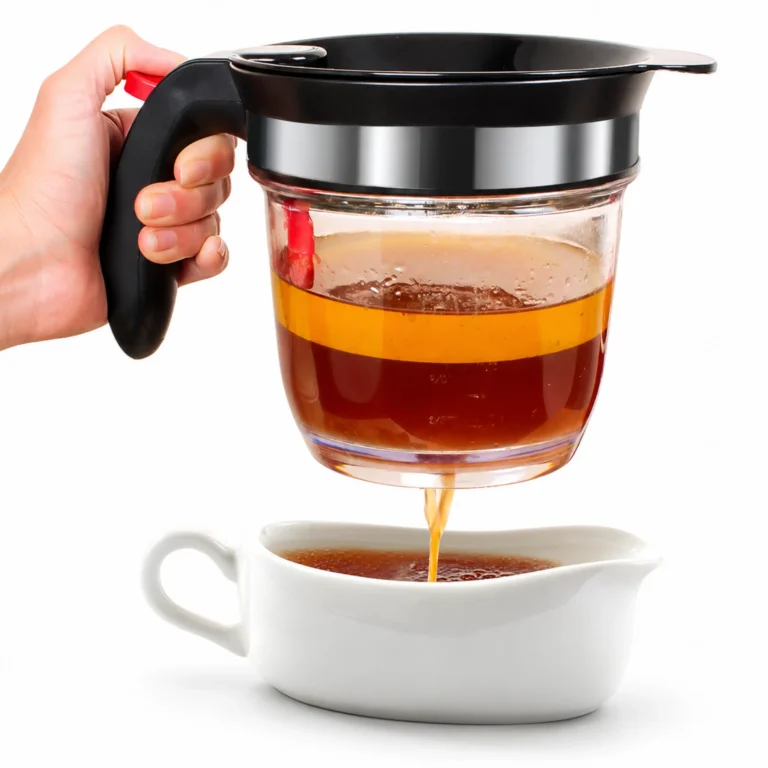
4-Cup Bottom-Release Gravy Fat Separator
Separates turkey pan drippings so you can save the fat for the roux and add the flavorful juices to the broth.
View on Amazon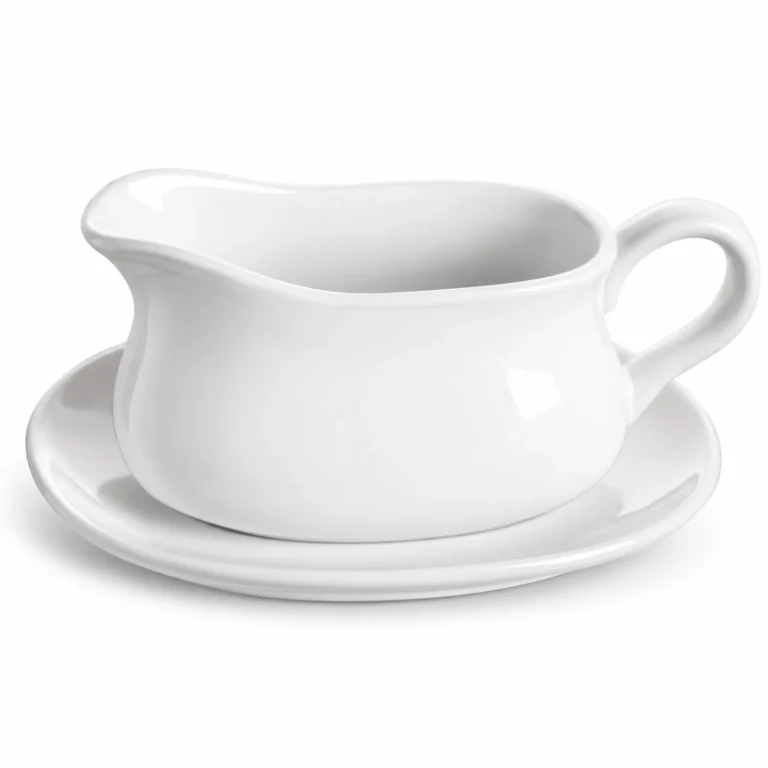
17-Oz White Ceramic Gravy Boat with Saucer
Makes turkey gravy easy to pour at the table, with a matching saucer to help catch drips between servings.
View on Amazon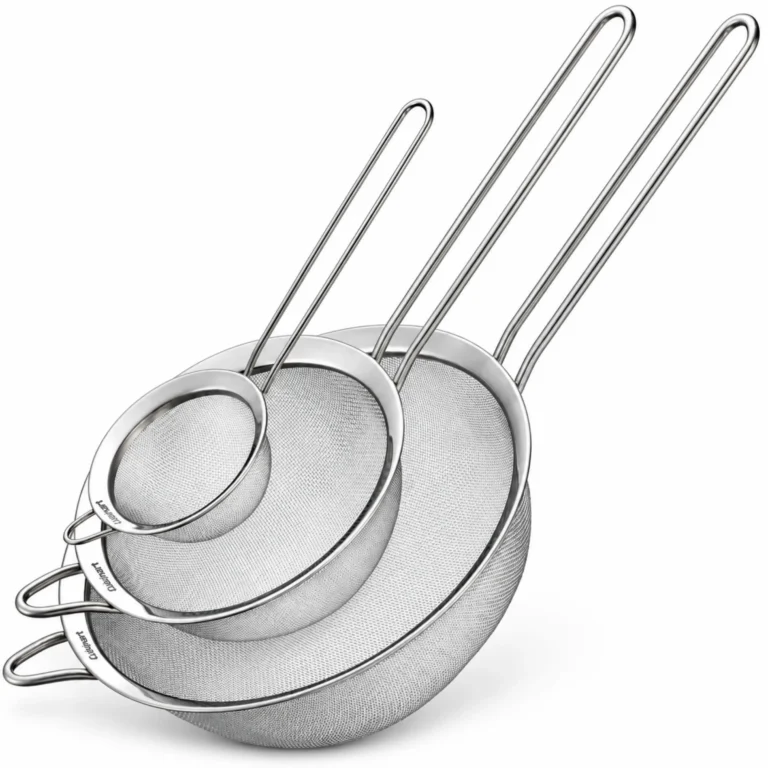
3-Piece Stainless Steel Fine-Mesh Strainer Set
Strains vegetables, herbs, and small solids from homemade giblet broth before you whisk it into the gravy.
View on Amazon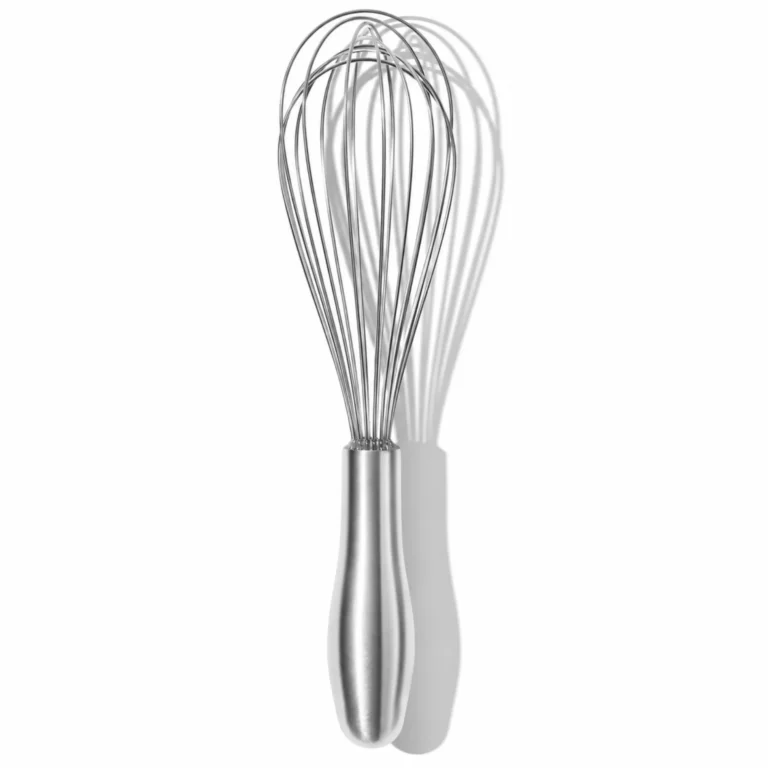
10-Inch Stainless Steel Balloon Kitchen Whisk
Helps combine turkey fat and flour into a smooth roux, then whisk in warm broth without creating lumps.
View on AmazonSome links may be affiliate links. If you purchase through them, GUSTANA may earn a commission at no extra cost to you.
Frequently Asked Questions
Which turkey giblets should I use for giblet gravy?
Use the turkey neck, heart, and gizzard for this recipe. The neck adds rich turkey flavor to the broth, while the cooked heart and gizzard are finely chopped and stirred into the finished gravy. Leave out the liver in this version because its stronger flavor can dominate a long-simmered broth.
Can I make giblet gravy without turkey drippings?
Yes. Make the roux with unsalted butter instead of turkey fat and use the strained giblet broth for the liquid. You will lose some of the roasted flavor from the pan juices and browned bits, but the neck, heart, and gizzard still produce a flavorful turkey gravy.
Can I make turkey giblet gravy ahead of time?
You can prepare the giblet broth and cooked meat one day ahead. Refrigerate the strained broth and chopped neck meat, heart, and gizzard in separate airtight containers, then make the roux and finish the gravy with the turkey drippings shortly before serving.
How do I keep giblet gravy from getting lumpy?
Add the warm broth to the roux gradually while whisking continuously, especially during the first few additions. If lumps still form, strain the gravy through a fine-mesh sieve before stirring in the chopped giblets and neck meat.
How do I fix giblet gravy that is too thick or too thin?
For gravy that is too thick, whisk in warm turkey or chicken broth a tablespoon at a time until it pours easily. If it is too thin, continue simmering it gently while whisking until it coats the back of a spoon. Avoid adding dry flour directly to finished gravy because it can create lumps.
How long does turkey giblet gravy keep?
Refrigerate leftover giblet gravy within 2 hours and use it within 3 to 4 days. For longer storage, freeze cooled gravy in airtight portions for about 2 to 3 months for best quality. Thaw it in the refrigerator and bring the gravy to a rolling boil when reheating, adding a splash of broth if it has thickened.